

Mass Torts and Inverse Condemnation in California: What They Are and Why Attorney’s Fees Matter
Intro
Large-scale disasters often leave property owners and businesses facing losses far beyond what insurance covers. Wildfires, floods, debris flows, pipeline failures, and infrastructure collapses frequently affect entire communities at once, giving rise to mass tort litigation. In California, some of the most consequential of these cases also involve a separate—and powerful—legal doctrine: inverse condemnation. Presidio Law Firm LLP represents property owners and affected parties in complex mass tort and inverse condemnation matters where public and private liability intersect and recovery depends on strategic use of multiple legal frameworks.
What Is a Mass Tort?
A mass tort involves claims by many individuals or property owners arising from the same event or course of conduct. Unlike class actions, mass tort cases typically proceed as coordinated or consolidated actions in which each claimant maintains an individual case but shares common factual and legal issues.
Mass torts are common in events such as wildfires caused by utility infrastructure, debris flows following land-use or drainage failures, industrial accidents, pipeline ruptures, and large-scale environmental contamination.
The unifying feature is not identical damages, but a shared cause.
How Inverse Condemnation Fits In
Inverse condemnation is a constitutional claim rooted in the principle that private property should not bear the cost of public improvements. In California, when property is damaged as a result of public infrastructure or public use—such as roads, flood control systems, or utility equipment—owners may seek compensation even without proving negligence.
Unlike traditional tort claims, inverse condemnation focuses on causation and public use, not fault.
This doctrine has played a central role in wildfire litigation, flooding cases, and other infrastructure-related disasters.
Key Differences Between Inverse Condemnation and Negligence Claims
Traditional tort claims require proof of breach of duty and fault. Inverse condemnation does not. Property owners must show that a public entity’s improvement or activity was a substantial cause of the damage and that the damage was a foreseeable result of that use.
This distinction can be outcome-determinative. In cases where negligence is difficult to prove, inverse condemnation may still provide a viable path to recovery.
Who Can Be Sued Under Inverse Condemnation
Inverse condemnation claims are most commonly asserted against public entities, including municipalities, counties, and special districts. In some circumstances, investor-owned utilities performing public functions may also face inverse condemnation exposure under California law.
Determining whether a defendant qualifies—and under what theory—requires careful analysis of function, control, and public benefit.
Attorney’s Fees: A Critical Difference
One of the most important aspects of inverse condemnation claims is attorney’s fee recovery. Under California law, prevailing plaintiffs in inverse condemnation actions are generally entitled to recover reasonable attorney’s fees and litigation costs.
This fee-shifting framework reflects the constitutional principle that property owners should be made whole when they are required to bear the burden of public use. In large-scale disaster cases, fee recovery often makes litigation economically feasible for individual property owners.
By contrast, most tort claims follow the American Rule, under which each party bears its own fees absent statute or contract.
Inverse Condemnation in Wildfire and Infrastructure Cases
Inverse condemnation has been central to wildfire litigation involving electrical utilities, as well as cases involving flooding, drainage failures, and public works projects.
In these cases, courts examine whether the infrastructure was designed, constructed, or maintained in a way that made damage to private property a foreseeable consequence of its public use.
The analysis is fact-intensive and often requires expert testimony regarding engineering, design standards, and causation.
Mass Tort Coordination and Strategy
In mass tort and inverse condemnation cases, coordination is critical. Plaintiffs may benefit from shared discovery, joint experts, and coordinated motion practice, while still preserving individual damage claims.
Strategic decisions—such as whether to proceed through coordinated proceedings, bellwether trials, or global settlement discussions—can materially affect outcomes.
Insurance, Government Claims, and Parallel Proceedings
These cases often involve overlapping insurance claims, government claim requirements, and statutory deadlines. Navigating these parallel tracks requires careful sequencing to preserve rights without undermining recovery.
Failure to comply with claims statutes or notice requirements can bar recovery, even where substantive liability exists.
Why Causation and Expert Analysis Matter
Although inverse condemnation does not require proof of fault, it does require proof of causation. Establishing that public infrastructure was a substantial cause of damage often involves complex forensic analysis.
Early expert involvement can shape liability theories and influence whether inverse condemnation claims survive threshold challenges.
Remedies Beyond Property Damage
While inverse condemnation focuses on property damage, mass tort litigation may also involve claims for business interruption, relocation costs, and related losses under companion tort theories.
A comprehensive recovery strategy often involves pursuing multiple legal avenues simultaneously.
Why These Cases Require Specialized Experience
Mass tort and inverse condemnation cases are procedurally complex, expert-driven, and resource-intensive. They often involve sophisticated defendants and overlapping legal doctrines.
Experience matters—not just in proving liability, but in structuring cases to withstand early challenges and position them for resolution.
Closing
Mass torts and inverse condemnation claims reflect a fundamental principle of fairness: individual property owners should not be forced to absorb losses caused by public infrastructure or large-scale failures that serve broader interests. In California, inverse condemnation provides a powerful path to recovery, including attorney’s fees, in appropriate cases. Presidio Law Firm LLP represents property owners and affected communities in complex mass tort and inverse condemnation matters, pursuing compensation grounded in constitutional protections and strategic litigation judgment.
Related Media Coverage
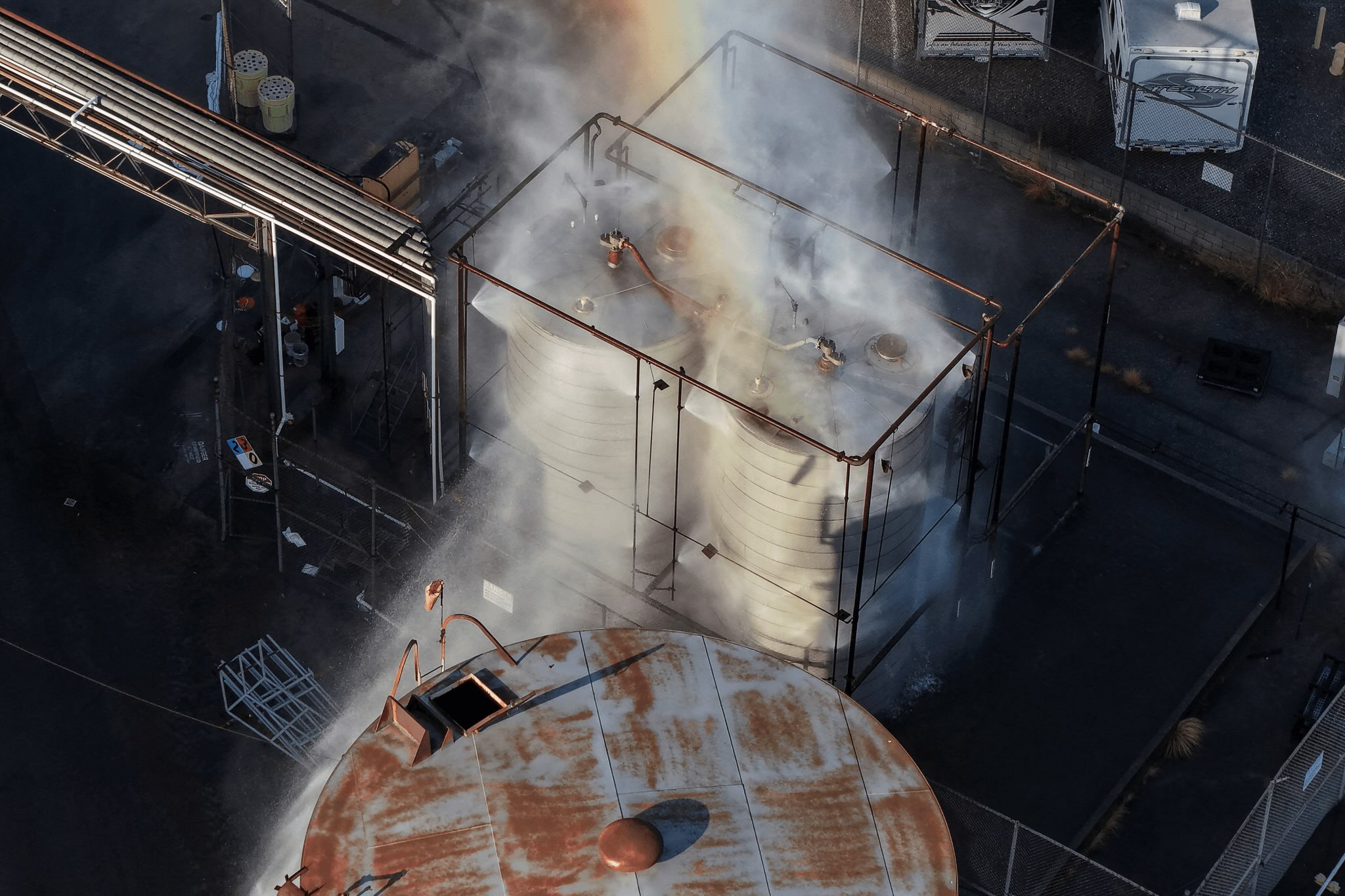
- Los Angeles Times: Garden Grove chemical tank crack reduces explosion risk
- CBS News Los Angeles: California chemical leak and Garden Grove emergency
- The Guardian: California chemical tank emergency draws federal attention
- FOX 11 Los Angeles: Class-action lawsuit filed amid Garden Grove chemical crisis
- Insurance Journal: Garden Grove chemical leak litigation coverage
- NBC Los Angeles: Garden Grove class-action lawsuit